Ancient Italian Mountain Path
Ancient Italian Mountain Path
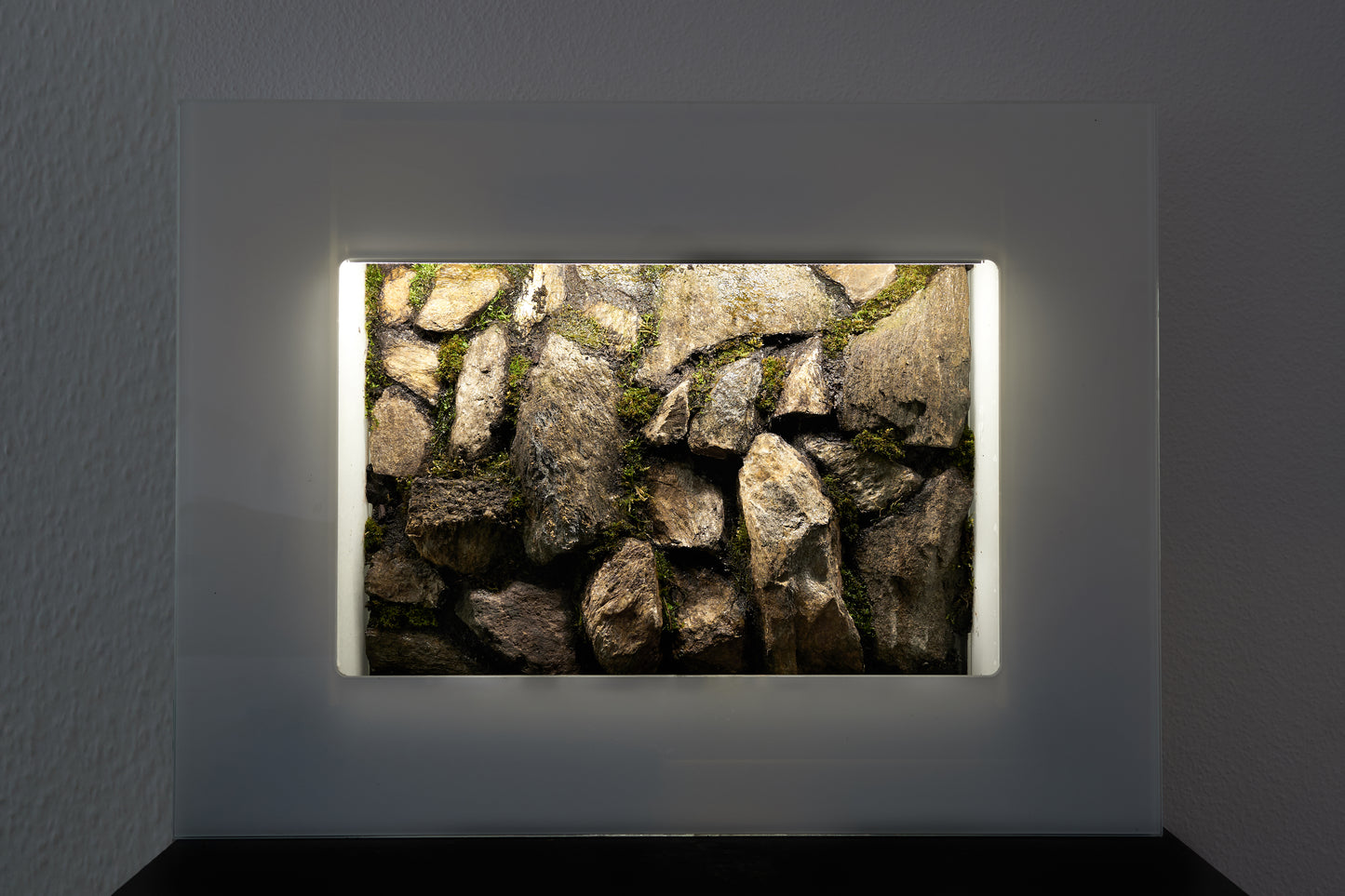
Inspired by historic mountain paths of the Italian Alps, specifically , this artwork recreates the inner surface of a sunken stone walkway. Native alpine mosses and ferns colonize the structure, reflecting ecosystems found between 1000 and 2000 meters elevation. Through controlled environmental conditions, the piece captures the gradual integration of human made structures into natural landscapes, where function evolves into living form.
PlantArt, 2026
80 × 60 × 13 cm
Natural stone, living alpine ecosystem, fully automated
A Living Fragment of Alpine History
“Ancient Italian Mountain Path” is a living ecosystem artwork inspired by the historic footpaths that traverse the high montane regions of the Italian Alps. Measuring 80 × 60 × 13 cm, the piece recreates a vertical section of these paths, capturing both their structural form and the quiet ecological life that has developed around them over time.
These paths were historically built slightly below the surrounding landscape, often enclosed by stone walls rising between half a meter and one meter. This design allowed them to remain accessible during winter, providing protected routes through the mountains. While some of these paths are still visible today as part of alpine walking trails, others have gradually disappeared, preserved only through local knowledge and memory.
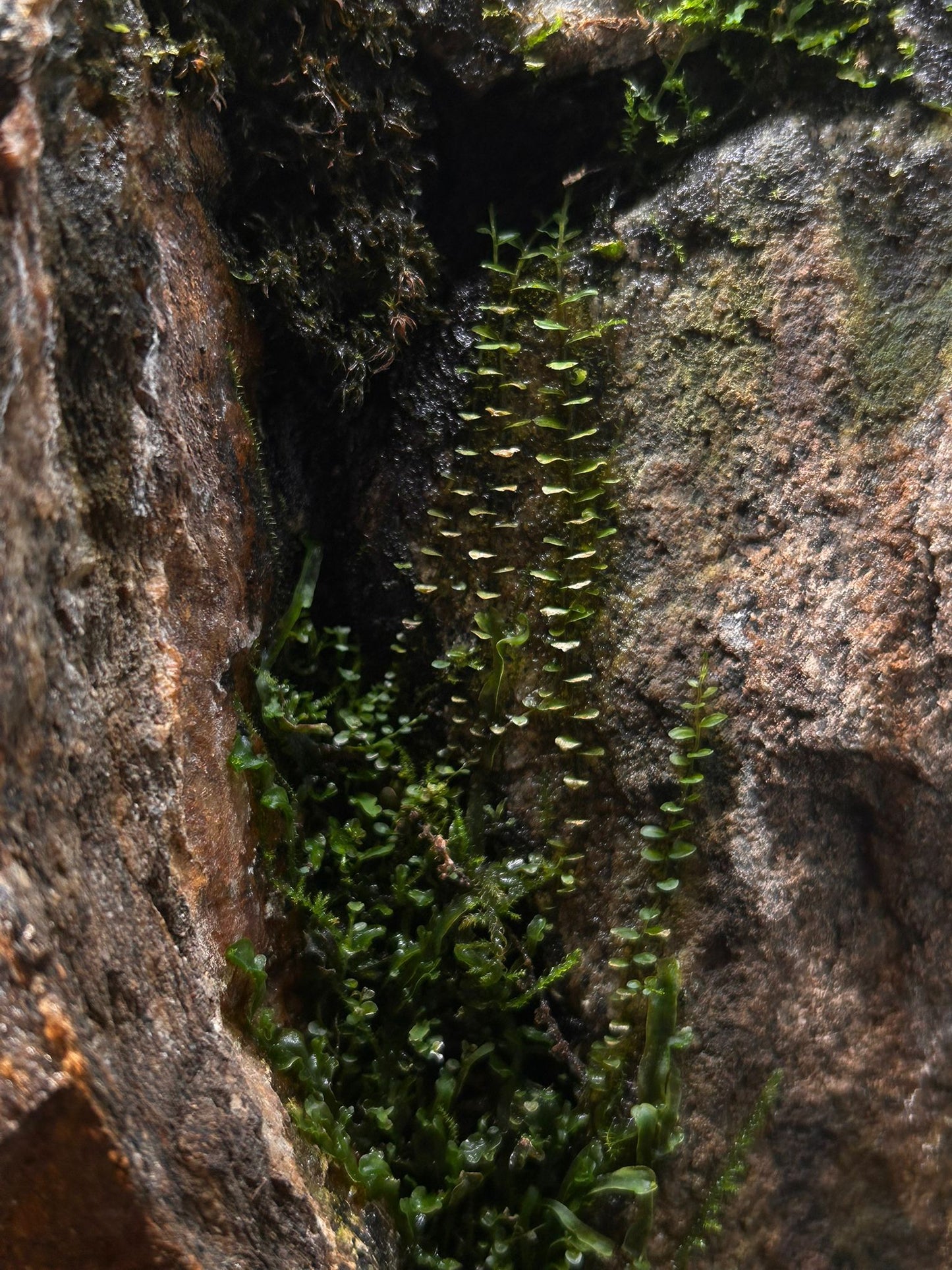
The artwork focuses on the inner side of such a path. It presents the stone wall as a living surface, shaped by time, moisture, and natural colonization. Mosses and ferns settle into crevices, transforming the rigid geometry of stone into a soft, evolving landscape.
Concept and Meaning
This piece reflects the intersection of human craftsmanship and natural succession. What was once built for function has, over time, become part of the ecosystem itself.
The artwork captures a moment where structure and nature are no longer separate. The stones remain as a trace of human presence, while the plant life represents the slow reclaiming force of the alpine environment.
It invites reflection on how landscapes evolve, and how even the most deliberate constructions eventually integrate into the rhythms of nature.
Ecosystem Design and Integration
The piece is designed as an open ecosystem that integrates seamlessly into interior spaces. Without glass barriers, it allows a direct connection between the viewer and the living surface, reinforcing the sense of encountering a real fragment of landscape.
The system is fully automated, regulating light, humidity, and water cycles to replicate the conditions found in intermediate alpine climates. Subtle moisture gradients and controlled airflow recreate the environment of shaded stone walls where water seeps, evaporates, and condenses over time.
The use of natural stone is central to the composition. Each surface interacts with moisture differently, creating micro habitats that support diverse plant growth within a relatively compact space.
Botanical Composition and Alpine Context
The plant selection reflects species commonly found in the southern elevated Alps, typically between 1000 and 2000 meters above sea level. These plants are adapted to cool temperatures, high humidity, and mineral rich substrates.
Asplenium ruta-muraria originates from Europe and grows naturally in calcareous rock crevices. It is highly adapted to life on stone surfaces, where minimal soil and periodic dryness define its habitat.
Asplenium trichomanes is widely distributed across Europe and can often be found growing directly within cracks of stone walls. Its delicate fronds contrast with the hardness of its surroundings, emphasizing the balance between fragility and resilience.
Cratoneuron filicinum is a moss species native to Europe that thrives in consistently moist environments, often near springs or along wet stone surfaces. It plays a key role in softening the structure and retaining moisture within the system.
The moss composition consists of species typical for alpine environments, particularly those found in shaded, humid locations. These mosses act as both visual and functional elements, stabilizing moisture and creating a continuous living layer across the stone.
A Landscape Shaped by Time
What defines “Ancient Italian Mountain Path” is its sense of temporal depth. The artwork does not represent a single moment, but rather an ongoing process.
The plants continue to grow, adapt, and settle into the structure, much like they would in nature. The piece evolves slowly, reflecting the gradual transformation that occurs in alpine environments where human traces fade and ecological processes take over.
Closing Reflection
“Ancient Italian Mountain Path” exists between memory and presence. It captures a landscape shaped by human necessity and transformed by nature over time.
By bringing this environment into an interior space, the artwork offers a moment of stillness and observation. It reminds us that even the most functional elements of our past can become part of a larger, living system, where nature does not erase history, but absorbs it into a new form of balance.
Ecosystem
Ecosystem
Intermediate montane forest
Size
Size
80x60x13cm
Portfolio note
Portfolio note
January 2026
This living artwork is available as part of the PlantArt rental collection.
Share